61 Virginis
61 Vir · HD 115617 · 8.52 pc · G5V · 3 super-Earth candidates
Section 01
General Information
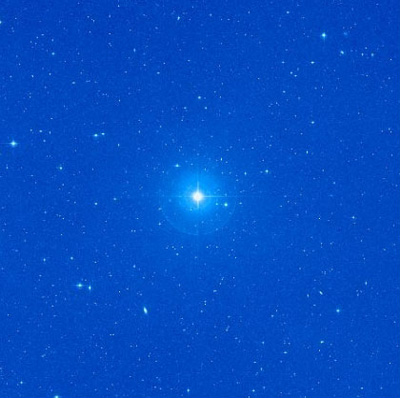
61 Virginis is one of the best solar analogues known — G5V with [Fe/H] ≈ −0.01. Its three super-Earth/Neptune-class planets make it a key target for probing how near-solar chemistry translates to planet formation outcomes. A direct comparison to 55 Cnc A ([Fe/H] = +0.32) at the same spectral class tests the metallicity–planet mass function.
Stellar Parameters
| Parameter | Symbol | Value | Source |
|---|---|---|---|
| Effective temperature | Teff | ~5577 K | Literature |
| Surface gravity | log g | ~4.39 | Literature |
| Metallicity | [Fe/H] | ~−0.01 dex | Literature — nearly solar |
| Spectral type | — | G5V | Excellent solar analogue |
| Distance | d | 8.52 pc (27.8 ly) | Gaia DR3 |
Known Planets
| Planet | Mass | Type | Semi-major axis | Hab zone |
|---|---|---|---|---|
| 61 Vir b | 5.1 M⊕ | Super-Earth | 0.0502 AU | No — too hot |
| 61 Vir c | 18.2 M⊕ | Neptune-class | 0.2175 AU | No |
| 61 Vir d | 22.9 M⊕ | Neptune-class | 0.476 AU | No |
Section 02
NASA Interactive Visualization
Section 04
Our Findings
Section 05
References & Credits
Key Literature
Vogt et al. (2010), ApJ 708, 1366 — three-planet discovery
Mayor et al. (2011) — planet confirmation
Data Sources
NASA/IPAC Exoplanet Archive
SIMBAD / CDS — stellar parameters
Hipparcos / Gaia — parallax & distance
Image Credits
Image: STScI / DSS2 — 61 Virginis field
Interactive sky: CDS Aladin Lite v3 / DSS2
NASA Eyes: NASA/JPL-Caltech
Pipeline
HARPS S1D — ESO Science Archive
Analysis: The Exoplanet Codex